Each day is a new experience
Welcome to Brno! Let us show you the city by taking you to one of it's most beautiful historical buildings. Here we'll begin building new relationships, discovering opportunities and harnessing energy for the Conference ahead.
Mark Thursday 28.05. at 17:00 in your calendar if you want to attend this party. Make sure you have a Premium Pass or higher, wear something fancy for the occassion, and keep your mind open to new horizons.
This event is reserved for Speakers, VIP, and Premium Business Pass holders
There's no better way to start Game Access than with good beer and even better company. Visit this causal meetup to boost your Conference spirit, find new friends and catch up with old ones.
We'll begin at Thursday 28.05. at 19:00. Wear something authentic and comfortable, celebrate your community and let the good times roll.
This event is open to everyone except Lite Pass holders
Game Access Intros are a staple of the Conference, setting us all in the mood and energy for the days ahead. Get ready for an opening cinematic, a music performance and an introduction by a very dear moderator.
A strong community is one of the most valuable long-term assets a game studio can build. Using practical examples from the development of Gray Zone Warfare, this talk explores how a Community First approach can turn players into loyal ambassadors, strengthen your brand, support long-term sales, and positively shape the development of your game.
Modern game design is often about instant gratification. Quick and short loops, easy and plentiful rewards, every psychological trick in the book to get people hooked in the first minutes. But is it sustainable to make most video games this way?
The presenter will use his experience, including the upcoming authentic hunting game Way of the Hunter 2, to define and explain 5 main principles of "slow game design" and putting players into a trance-like state:
1) applying selective resist,
2) avoiding choice overload,
3) prioritizing process over goals,
4) making failure positive,
5) trusting the player.
Each principle will be studied through "lenses" (general design, UX/UI, animation, audio, narrative, business) and illustrated by examples from successful games as well as a couple of case studies from the presenter's experience. Visitors will walk away with an understanding of of how to apply these principles and "lenses" to their future and existing productions.
How do you actually fund a game today—and what makes sense at each stage of development?
This panel breaks down the real-world funding options available to indie developers, from public support and game accelerators to publisher and investor deals, as well as alternatives like crowdfunding or early access.
Bringing together perspectives from across the ecosystem—including studios, incubator programs, and the newly emerging public support system—the discussion will dive into the trade-offs behind each path. What do you give up, what do you gain, and how do you choose between private funding (like incubators or publishers) and public support?
Why attend?
Get a clear picture of how game funding works today—and how to make smarter decisions for your own project.
Imagine a world where teenagers' hand-drawn emotions transform into an interactive AR adventure. This talk explores the intersection of art therapy, game design, and augmented reality technology to support adolescent mental wellbeing.
We'll take you through the complete journey of creating an AR escape game—from theoretical foundations to technical implementation. Participants first express suppressed emotions through individual and collaborative artwork in carefully designed workshops, then see their creations come alive as AR markers that unlock emotional narratives and healing experiences.
Through this comprehensive case study, you'll learn:
- How to design workshop structures that foster emotional safety while encouraging authentic expression - The theoretical framework combining Art-Based Methodologies (ABM) and Social-Emotional Learning (SEL)
- Creative and technical processes for transforming physical artwork into interactive AR game elements
- Practical implementation strategies using Unity AR Foundation for user-generated content Ethical considerations and participant protection measures when working with adolescents on sensitive topics
- Data collection and feedback mechanisms for participatory design research
Hiring in the game industry looks different today than it did just a few years ago. Increased competition and shifting priorities have changed what studios expect from candidates at all levels.
Drawing from experience in Talent Acquisition across gaming in Europe, this talk explores how the “bar” for talent has evolved. I’ll share common patterns I see in applications and interviews, why strong candidates are often overlooked, and what developers can do to better align with current expectations.
Can we work together on a European brand of games to expand our global reach and appeal?
Panel discussion with European game dev associations on their collaboration, co-production and joint promotion.
LLMs are rapidly entering game development workflows — from code generation to debugging and internal tools. With solutions like Claude Code, expectations are high: faster iteration, reduced costs, and leaner teams. But how do these promises hold up in real production environments?
As a technology service provider working with multiple studios across different projects and production stages, we approach LLM adoption with one key requirement: predictability. Across Unreal Engine 5 codebases — from gameplay systems to tools and pipelines — we’ve explored where LLMs provide tangible value, and where they introduce risk, inconsistency, or hidden costs.
In this talk, we share a pragmatic, field-tested perspective on integrating LLMs into UE5 development:
- Where LLMs (including Claude Code) effectively support C++ and Blueprint workflows
- Common failure patterns when applied to real production code
- The impact on code quality, maintainability, and team workflows
- Why perceived speed gains can be misleading without proper evaluation
- Practical ways to measure productivity and efficiency in LLM-assisted development
Rather than focusing on future possibilities, this session is grounded in current production realities. It aims to help studios make informed decisions about adopting LLMs — based on evidence, not expectations.
Vladimír Geršl will present a unique insider perspective on today’s global game publishing landscape, based on years of scouting and collaboration with publishers worldwide. The talk will explore how publishers actually search for new projects, why traditional cold outreach is becoming increasingly ineffective, and how content oversaturation is reshaping game financing and publishing.
He will also demonstrate how years of consulting know-how, matchmaking, and business development are being transformed into Sail.Game — a data-driven B2B platform designed to connect game studios with the right partners from a network of 200+ publishers and investors, based on their real strategy, focus, and publishing needs.
Creative Europe MEDIA – Support for Video Games and Immersive Content Development
Creative Europe is the European Union programme providing support to the culture and audiovisual sectors. The MEDIA strand supports the development of films and video games, TV productions and online formats, distribution, film festivals and markets, training programmes for audiovisual professionals, cinemas and VOD platforms. What funding opportunities are available to developers and professionals from the gaming industry? What projects are eligible to receive support, and under what conditions?
How to start, what to watch out for, and mistakes to avoid + Q&A
Are you ready to launch your gamedev career but worried about hidden traps that could ruin your project right at the start? Join this session with an experienced legal consultant for game developers who will share battle-tested tips and practical solutions for the exact challenges you will face. Together, we’ll dive into setting up fair team deals, protecting your game’s intellectual property, and spotting red flags in publisher contracts. You’ll learn how to identify critical legal bugs early and patch them before they damage your studio. Bring your toughest questions to the open Q&A and get the practical insights you need so your game doesn't die in Level 1.
Rami Ismail (Ridiculous Fishing, Nuclear Throne) talks about the challenges and opportunities of independent game development in an interactive, ask-me-anything talk.
Working with player feedback is essential for a game's success, yet it often remains a "behind-the-scenes" process. Experienced devs don't just guess - they hunt for insights and track the right metrics to decide which direction to take during development. Whether it’s observing behavior through playtests or quantifying behaviour via analytics, every approach has its own benefits and limits. But the main focus is on the fun and enjoyment players should experience - even if, for some, that means a bit of frustration on the way to the end of a Souls-like game.
How do you achieve not only an award-winning or memorable game, but also a retail hit? That is an intricate task for dedicated teams with open minds who value crossteam collaboration. We invited various researchers from game studios behind hits to share their experience on how player feedback helps them build the games that players love.
AI is no longer just hype or a content-generation tool – it is becoming part of how games are designed, prototyped, and played. Its biggest impact lies not only in outputs, but in how it reshapes pipelines, iteration speed, and team workflows.
This workshop offers a practical look at where AI truly adds value in game development (production, design, NPCs, prototyping) and where it hits real limitations. We will focus on real-world experience – what works, what doesn’t, and why AI is not a “virtual employee” you can simply plug into existing workflows.
We will also cover key risks: ownership of AI outputs, use of training data, real-time generated content in gameplay, and the resulting impact on players, communities, and relationships with platforms and publishers.
A key theme will be the human factor – why, as AI grows, so does the importance of curation, design intuition, and the “human touch” players expect.
Why attend?
Get a realistic, practical view of AI in gaming – what actually helps today and what to watch out for to avoid breaking your project or your player relationships.
“Detective” as a genre has been around for centuries in literature, theater, movies and any other medium. But how does “detective” work in games? In this talk we won’t really bother with definitions, we'll dive straight into the process of making a detective game. Or just a quest, a mission, side story or a game jam project.
We'll walk through the building blocks of a compelling mystery and explore how they shape (and are shaped by) gameplay, narrative, theme, and style.
We'll go through a checklist (a recipe, if you will) of all the challenges you'll need to tackle when building a mystery for your players. And most importantly: how do we make players feel like a detective?
Q & A - The New Bar - What Game Studios Are Actually Looking For in 2026

Film and games have been borrowing from each other for decades. But how does that actually work in practice, and what gets lost - or gained - in translation?
Moderated by Tereza Roller-Sabella (Plan A Collective), this panel brings together Igor Sobolev (Mafia: The Old Country), Tomáš Kozlík (Kingdom Come: Deliverance, RDR2, Avatar 2), Guillermo Dupinet (Deus Ex: Mankind Divided, Ant-Man and the Wasp, PAW Patrol), and Theodore Hilhorst (2K Czech, Mafia: The Old Country) - people with a foot in both worlds.
Story of how Fool's Theory's LD and art team approached the challenge of designing the setting of The Thaumaturge - 1905's Warsaw. I talk about specific, real-world locations that we recreated for the game: what we recreated faithfully, what we modified, what we had to cut or skip. I present the references we used, I also talk about the challenges that we encountered and how we got through them.
Most pitch advice focuses on format, but this talk focuses on impact. Whether you're pitching a game to a publisher, a co-dev proposal to a studio, or yourself in a job or partnership conversation, the principles are the same and use the same psychological concepts. This session breaks away from the usual templates and digs into the psychology behind great pitches. You’ll learn how to frame what you’re offering in a way that resonates with what your audience actually cares about, and how to build trust before you even get to the slide deck.
Key Takeaways:
• Learn to pitch from the listener’s perspective: Understand what your audience is really evaluating, their problems, and how to align your message to their priorities.
• Focus on value, not format: Why successful pitches communicate outcomes and insight, not just features and structure.
• Leverage psychological principles: Use concepts like narrative transportation, risk aversion, and liking to build trust and credibility quickly.
• Pitching as a long game: How to leave a lasting impression that opens doors even if the answer isn’t "yes" today.
• Focus on the next steps: The pitch is just the beginning. How can you take the next steps after a pitch and create action?
Most indie studios underestimate intellectual property rights – and available statistics confirm this. Yet these rights can make or break an entire project. This workshop will walk you through who actually owns the individual parts of a game, how to properly structure collaboration with your team, and what to watch out for when distributing on global platforms. We will also address key practical questions around protecting your rights – from takedown processes to defending against unauthorized claims.
Why attend?
Because one small legal mistake at the beginning of development can destroy your entire game project – and this workshop will help you avoid it.
Archiving digital games is important for their preservation for future generations, but also for their understanding today as cultural heritage. This presentation and open debate will introduce the National Film Archive's project Pixelarchiv.cz which develops methods and tools for archiving Czech and Czechoslovak interactive art. Aimed (not only) at local developers, the session will clearly explain how the project builds developer-friendly archiving and collaborates with the retrogaming community and universities.
We will clarify what exactly is worth archiving and demonstrate the process using Creaks by Amanita Design. Come discuss and influence the paths toward meaningful care for gaming cultural heritage!
This talk will be held in Czech
Q & A - How developers work with players' feedback
Every studio hits a point where running on trust and good intentions stops being enough. Decisions get made in the dark - and reversed just as quietly. Problems surface too late. Good people go quiet. This happens whether your team is in one room, spread across three floors, or sitting across the world. Things gets worse the faster you grow.
In this session, Tom will share practical tips for replacing informal coordination with something that actually scales: clear ownership, escalation paths that work, and documentation people actually use. You'll leave with a diagnostic for where your studio is today, and a concrete first step for Monday.
Where can European studios seek help and support in a time of uncertainty?
Panel discussion with EU agencies and organizations providing financing, consulting and development support for European studios.
Built for indie developers, this workshop breaks down publisher agreements — what red flags to look for, which provisions matter most, and how to negotiate effectively with publishers.
This workshop will be held in Czech.
Vladimír Geršl and Mikoláš Tuček
Finding the right publisher requires clear preparation and a strong understanding of what publishers expect. This mixer session will focus on how developers can prepare for publisher meetings, from pitch decks, demos, budgets, timelines, and production plans to presenting their game’s market potential and long-term vision.
The session is designed as an open discussion for registered participants interested in working with publishers. Participants may be asked to submit their pitch decks in advance so the discussion can be better tailored to their projects.
A lively discussion on what makes a horror game, best practices to cultivating atmosphere and increasing immersion from the masters of horror at Bloober Team and Hey Bird!.
The media often highlights only the shining successes of Czech game developers. In their shadow, however, the current global crisis in the gaming industry is taking a heavy toll on most small and new teams, with private investors and publishers hesitating to support new gaming projects. How can the state help in this situation?
A debate featuring representatives from the Ministry of Industry and Trade, the Ministry of Culture, CzechInvest, and the Czech audiovisual fund
This talk will be held in Czech.
A comparison of game development and military simulator development, focusing on which aspects are simpler and what makes simulator development more challenging.
Simulators typically require handling large-scale environments, a high number of entities, a strong emphasis on realism and often distributed system architectures. The talk is based on our practical experience and real-world projects.
We will also outline our development journey, from using a commercial engine through extensive modifications to building a largely in-house engine we now consider our own.
This talk explores how to develop a content vision for an ARPG by working with specific design pillars and merging gameplay with narrative, while also covering the fundamental principles of open-world and quest design.
Every night, streamers play your game live. Thousands of viewers comment on every spawn, every bug, every design decision. Saying exactly what they'd never write in a Steam review. Almost nobody reads that data. Radek Hanzlik from Good Game will show how his team analysed millions of real stream chat messages and what that means for developers. Using a real game as a case study, you'll see which moments make chat explode, how sentiment shifts around patches and announcements, and how to spot incoming backlash before it hits social media. No surveys. No focus groups. Just what players say when they think nobody's listening. For developers, publishers, and marketers who want to understand their community beyond likes and Metacritic scores.
A short overview of how we tackle the challenges of keeping the Animation pipeline flowing in a fully remote studio.
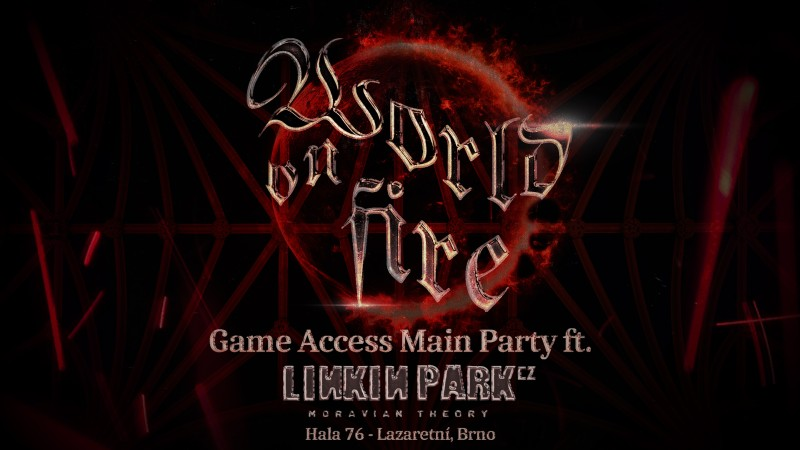
This will be our most ambitious party yet. Expect a killer atmosphere, lots of music & entertainment, delicious drinks, and of course, the best people – courtesy of you, the Game Access Community.
It will begin on Friday 29.05. at 21:00. Dress code? Fallout. Good times? Guaranteed.
This event is open to everyone except Lite Pass holders
Building progression systems isn’t just about features it’s about longevity. Over time, even small design flaws can become massive production headaches. This session will explore how to think about system design not as a one-time solution, but as a living, evolving structure. I will share lessons learned from years of building and maintaining progression systems across AAA and mobile projects. I'll focus on how to plan for change, communicate across disciplines, and set up systems that empower, not constrain, your future self and your teammates.
Key Takeaways:
1. Learn a mindset for sustainable and adaptable system design
2. Discover practical methods for version-proofing data-driven systems
3. Improve collaboration between design, QA, and engineering
All of this backed by real examples from PCF and Plarium
The indie games space has never been more crowded, and the once tried-and-true routes to building a financially sustainable studio have never been less reliable. Serious and impact games aren't a quick fix, but - whether as an additional revenue stream or an all-in business model - they offer access to alternative funding pipelines, institutional partners and often ready-made audiences. Drawing on experience building an educational/social impact games studio into a multimillion-dollar business and leading serious game jam initiatives with NGOs, governments and UN agencies, Global Game Jam executive director Maria Burns Ortiz makes the case that serious games aren't just altruistic but smart business.
Honest discussion about how AI is reshaping QA in the games industry — what is already changing, what is still hype, and where QA professionals may need to adapt next. Practical, direct, and forward-looking - a panel discussion focused QA professionals and developers who want to understand how testing, quality, and QA careers may evolve in the age of AI.
Preparing to pitch your game, but unsure how to find the right partner that covers your needs as a developer? This talk will explore the pros and cons of publishing a project financing agreement, or simply doing it all by yourself. There is never one model that fits all, but how to find the model that fits you?
What happens when a single button transforms the rules of the game mid-play? In this talk, we explore the design and engineering of dimension-shifting mechanics—where one space becomes four distinct gameplay modes, each re-skinning the environment and rewriting combat, traversal, and interaction. Using our upcoming rogue-lite Cosmo Tales as a case study, we'll walk through the core challenges: readability under constant state changes, fair encounters across modes, and systems that stay stable while everything reconfigures. Expect concrete problems, the solutions we landed on, and practical takeaways for anyone building rapid, multi-mode gameplay that feels clear, cohesive, and satisfying.
For decades, Object-Oriented Programming (OOP) has been the standard for AAA engines. However, as hardware evolves toward massive multi-core parallelism, the limitations of OOP have become bottlenecks for scalability and iteration speed.
This session dives into the development of "WoT: HEAT," using a pure ECS engine designed to power the next generation of World of Tanks games. We will explore the architectural shift required to move a massive AAA live-service game into a data-oriented paradigm. Attendees will learn how a pure ECS approach facilitates determinism, simplifies multi-threading, and allows a single unified engine to handle diverse gameplay systems.
Q & A with Nate Purkeypile
As game development scales in complexity, teams face growing pressure to create larger worlds, higher-fidelity assets, and multi-platform content—often with limited resources. This session explores why optimization must be treated not as a late-stage technical task, but as a core production and business strategy. We’ll discuss how studios can reduce risk, prevent performance bottlenecks, streamline outsourcing, and accelerate iteration by building optimization into their pipelines from day one. Drawing from real-world industry practices, attendees will learn practical approaches for designing scalable asset workflows, enabling consistent quality, and preparing for the future demands of AI-generated and user-generated 3D content.
Key Learnings:
Why optimization belongs in pre-production, not during crisis mode Learn how early planning prevents expensive rework and late-stage performance problems.
How to structure scalable asset pipelines that support large worlds and high content volume
Understand frameworks for integrating optimization into art, tech art, and engineering workflows.
How optimization improves business outcomes
Explore how production efficiency, predictable scheduling, and better outsourcing practices reduce cost and risk.
How to prepare for AI-generated and UGC-driven content growth
Learn why future pipelines must be able to ingest, validate, and optimize unpredictable assets at scale.
How to deliver consistent performance across multiple platforms See how early pipeline decisions make cross-platform development easier and more sustainable.
How optimization increases iteration speed and creative freedom Understand the relationship between technical constraints and creative flexibility.
Throughout this talk we will explore why version control is the gaming industry's lord and savior and how significant its impact is on it. We will go through real life examples, common mistakes and how version control, when properly used, can address them: from solo dev to AAA studio. When you leave the room, you will have a clearer notion on why this is something that no dev should be afraid of!
JetBrains Rider is the ultimate game development IDE for Unity, Unreal Engine and Godot, and we keep on making it better. We’ll look at new and improved workflows across coding, debugging, analysis, and AI-assisted features that can help you work faster and smarter and write better games. The session is demo-driven and focused on ideas you can adopt gradually—regardless of engine, project size, or team setup.
Modern players want more than updates. They want involvement. In this session, we explore how to shift from reactive communication to intentional community design. Learn how to identify meaningful feedback, empower creators and modders, navigate criticism, and build a collaborative relationship between studio and player base.
What changes when you move from creating animation to leading artists? And what stays the same across film and video games?
In this talk, Animation Director Guillermo Dupinet shares lessons from over two decades of experience across both industries. Focusing on creative judgment in real production environments, he explores how leaders make decisions under pressure, how meaningful feedback shapes performance, and how artistic quality can be protected within tight deadlines and shifting realities.
This session is for artists, seniors and aspiring leads who want to better understand what truly helps when guiding creative teams in production
An honest conversation about relocating internationally for work in the games industry - the opportunities, sacrifices, culture shocks, and life-changing experiences that come with it.
Raw, funny, emotional, and highly practical two-man party talk focused on giving attendees realistic expectations rather than corporate answers.
This talk will cover both the artistic and technical perspectives of the system. I would explain how Technical Art works closely with Environment Art to ensure procedural tools meet visual, production, and performance requirements. The session would include a deeper technical dive into our building generation pipeline, key design decisions, common challenges, and lessons learned during production.
My goal is to provide practical insights that are directly applicable to teams working on procedural environments, especially where close collaboration between art and technology is required.
Where is it that the tech designer can really make the difference? Your designers are blocked, your programmers are buried in tickets, and your tools somehow make everything slower. You think you need a tech designer, and you are probably right. But this talk isn’t about hiring one, it’s about placing one.
We’ll break down how tech designers act as system owners, cut through handoffs, tame chaotic systems, and turn fragile pipelines into scalable content production…and why, if you get it wrong, nothing actually improves.
Martin Pernica and Johny Darkwah
AI is becoming a practical tool that can help teams save time, reduce repetitive work, and improve everyday workflows. This mixer session will explore how AI can support day-to-day operations, from communication, planning, research, and documentation to task management and process automation.
The session is designed as an open discussion for registered participants interested in practical ways to use tools such as custom agents, Custom GPTs, and AI-powered workflows within their own teams, projects, or studios.
In his talk, Executive Producer of KCD2 will explore the production process Warhorse used in developing their award-winning game. Starting from the fundamentals of the production, he will go into tricks and custom made solutions for that project, and give candid assessment of what worked and what didn't.
Czech game developers are connected through various professional, national, and regional associations that continuously work to grow the Czech game dev ecosystem. What benefits can this collaboration actually bring?
Presentation of the activities and goals of individual organizations: Czech Game Developers Association, Game Education Association, Game Cluster, Game Devs Ostrava, and Visiongame. Followed by a discussion with their representatives.
This presentation explores the journey of Bytebond (previously known as Bzzz! Together in power), beginning with its victory at the Game Access Conference 2022 and finishing with a successful market release. We will talk about the transition from a prize-winning prototype to a polished commercial product, highlighting the strategic problems overcome along the way.
This session introduces the essential principles of UX design for anyone working in game development, regardless of discipline or seniority. The core premise is simple: every role in a development team influences the player experience, and understanding fundamental UX concepts enables better decisions across the entire production pipeline.
The talk will outline how people naturally perceive, process, and respond to information, and how these behavioral patterns can be leveraged to design more intuitive games.
No prior knowledge of UX is required. Participants will walk away with a practical understanding of what UX is, why it matters, and how to start applying its core principles in their everyday work.
In the world of Virtual Reality, immersion is often described as a "bubble"—fragile, beautiful, and incredibly easy to burst. We spend millions on high-fidelity graphics and powerful hardware, yet the smallest oversight in a physical interaction or a sensory mismatch can instantly pull a user out of the experience.
This session dives into the psychology and "micro-mechanics" of the virtual feeling. We will explore why human perception craves sensory feedback and how to master the art of "Touching the Invisible"—using subtle haptic cues, spatial audio, and intuitive design to convince the brain that the digital world is real.
We’ll move beyond the theory to look at practical applications across industries, questioning whether current breakthroughs represent a slow evolution or the spark of a true technological revolution. Finally, we will discuss why the principles of immersion aren't gated behind a headset; they are becoming the new standard for all digital human-computer interactions.
Agenda
1. Introduction: My journey in XR and quick dive into my research.
2. Defining the Bubble: What is immersion, and why is it so easily broken?
3. The Sensory Gap: Why the "virtual feeling" is a biological necessity, not a luxury.
4. Touching the Invisible: Techniques for creating tactile illusions without physical constraints.
5. Evidence of Impact: Analyzing the data—does high immersion actually improve outcomes?
6. Practical Realities: Implementation strategies for industry and entertainment.
7. Evolution or Revolution: Predicting the "Great Future" of immersive hardware.
8. The Universal Standard: Applying immersion principles to non-VR environments.
9. Q&A: Open floor for discussion and deep-dives (10 Minutes).
Agnieszka Gałecka and Filip Šťastný
A successful Steam launch starts long before the release date. This mixer session will focus on how developers can prepare their Steam presence, from store page setup, visuals, trailers, tags, and wishlists to messaging, timing, and community building.
The session is designed as an open discussion for registered participants who want to improve their launch strategy, ask questions, exchange experiences, and explore practical steps to help their game reach the right audience.
Industry veterans discuss how to keep players engaged and hooked for the long haul, sharing best practices alongside the harsher lessons learned from the development of Gray Zone Warfare, The Wizards: Dark Times, Silent Hill 2 Remake, the Fallout series, Skyrim, Starfield, and Arma. Learn how creative direction, art direction, and environment design play a vital role in a video game's longevity.
What does "stability" actually mean in the 2026 games market? Join our panel of industry experts for a conversation about what it actually takes to land a job today. We’ll dive into hiring essentials - like portfolio impact and universal skills - before exploring how LLMs are transforming both recruiting and job hunting.
What if game music could rebuild itself every time it loops?
This talk explores the so-called "Adaptive Chain System", a compositional method that turns looping background tracks into endlessly evolving musical experiences.
This system uses modular “chunks” of music that reconnect in different combinations each time the loop restarts. The result: even if the player stays in the same area for twenty minutes, the music never feels repetitive or static.
Each playback creates a new, logically consistent chain that feels composed by hand, yet adapts naturally in real time. This approach bridges traditional composition with adaptive game logic, showing how small musical building blocks can create infinite emotional variation without losing musical structure.
Whether you’re a composer, sound designer, or developer, you’ll learn how to transform static loops into living, breathing scores that stay fresh no matter how long the player lingers.
Godot has rapidly gained popularity in recent years, but many studios still question whether it is ready for serious production.
In this talk, I’ll share insights from research I conducted for two game studios evaluating whether Godot could be a viable engine for their projects. We’ll look at the strengths and limitations of the engine, what kinds of projects it is best suited for, and where it still struggles compared to other engines.
The talk will also include practical lessons from daily development in Godot — covering workflow, tooling, performance, and ecosystem maturity.
Rather than focusing on hype or opinions, the goal is to provide a realistic picture of where Godot stands today and when it makes sense to choose it over alternatives like Unity or Unreal Engine.
I will discuss the process of recording and designing a wide range of sounds for KCD2, as well as the challenges of creating an authentic soundscape. The session will also cover practical recording techniques, microphone setups, and selected implementation workflows used to bring the world to life in-game.
Times have changed, the AI tools are either opportunity or a destruction element in education processes - it depends on who you ask. In this panel we will discuss how particular courses changed in the post-covid AI era. The panel will focus on concrete cases of change and new approaches we as teachers had to design and apply on curriculum. We encourage the audience to participate, especially if you teach as well, any experiences and best practices shared are welcomed.
The Core Challenge: The "Fun" Gap
The success of any video game hinges on the experience of "fun"—a notoriously elusive concept. In practice, materializing this experience requires constant iteration due to a persistent friction: the divergence between the Game Designer’s mental model and that of the end user. As Donald Norman established, mental models are internal representations of how a system works; they are often simplified and inaccurate. In game design, this leads to "Game Designer Catnip"—mechanics that designers find brilliant but which fail to resonate with real-world players who approach the system with entirely different expectations.
The Limits of Traditional Telemetry
For over a decade, gameplay traces and telemetry have been the gold standard for modeling behavior. However, these quantitative approaches face critical bottlenecks. First, they often lack a foundation in psychological theory, resulting in data that tells us what happened (a player died 10 times) without explaining why (frustration, lack of clarity, or intentional challenge). Second, traditional analytics are frequently siloed within "in-game" activities, ignoring the vast ecosystem surrounding the play session.
Expanding the Scope: The "Invisible Playground"
To achieve a true 360-degree vision of the player, we must look beyond the game engine. A significant portion of the player experience occurs in what Salen and Zimmerman call the "Invisible Playground": community forums, Discord servers, the modding scene, and even navigation through game menus.
This talk argues that a video game is not just a software product but a global Customer Journey. From the moment of acquisition to the interaction with technical support, every touchpoint matters. Just as a consumer's past experience with a brand shapes their future expectations, a player's history with a specific genre (e.g., RPGs) dictates how they evaluate your game. Traditional telemetry is blind to these external influences.
The Solution: NLP and the Internet of Behavior (IoB)
We propose an evolution of Game User Research through the integration of two powerful tools:
Natural Language Processing (NLP): By applying semantic analysis to the "Invisible Playground," we can transform qualitative feedback (player reviews, forum debates) into quantitative insights that complement gameplay logs.
Internet of Behavior (IoB): An extension of IoT, IoB focuses on analyzing data patterns to understand human behavior, intentions, and underlying needs. By capturing a wide variety of data—from navigation speed to platform-switching and geographic context—IoB allows us to infer the "why" behind the "what."
Moving Toward Adaptive Design
The ultimate goal of this hybrid approach is to move away from fixed archetypes. Players are not static categories; their motivations shift based on their mood, their social context, and their progression. By combining behavioral IoT data with semantic NLP analysis, studios can build a dynamic, 360-degree model of their audience. This allows for more adaptive game design, more ethical monetization, and, ultimately, a product that truly aligns with the player's mental model.
Everything you need to know about video game support from the Czech Audiovisual Fund in the Czech Republic
This talk will be held in Czech.
Let's chill, let's de-compress, let's have a toast to all the great experiences we've had over the past 2 days.
We'll meet on Saturday 30.05. at 20:00. Dress up as your most authentic self and let it all go.
This event is open to everyone except Lite Pass holders